

The best part about the passing of time is the distillation. I didn’t trust myself at twenty-two so I filled the space with things that asked nothing of that trust. As a thirty-year old woman, I have now moved through the base discoveries of life, personal style and basic relationship skills, unfulfilling hobbies and weak friendships. Distilling, in this context, is just the slow burning-off of everything we reach for instead of our own judgment. One by one the distractions dry up until we’re left holding the things we were avoiding but would never let go off, i.e., our deepest creative urges, our slowest-formed beliefs, and the right people to share it with. It is refreshingly simple... I think I’m becoming kind of wise?
At its core, alchemy compresses into two Latin words: solve et coagula or, dissolve and recombine. This also happens to be the whole curriculum of aging. Eventually you live long enough to see the forever-evolving befores and afters. Kids becoming beautiful (and making decisions that seem too big for them). Coffee shops becoming trendy (now well-dressed in all the vintage furniture I cannot afford). Late night conversations becoming novels. Rot distilling to gold.
Alchemy’s strangest claim is about its raw material. The prima materia — the base substance you begin from — was described by the adepts as something common, worthless, found in the dunghill, trodden underfoot, recognized by no one. The first and darkest stage of the Great Work is the nigredo: the blackening, the putrefaction, the prima materia rotting in the sealed vessel. Alchemists depicted it as a corpse, a raven, a king in his tomb. Nothing transmutes that hasn’t first decomposed. The gold was never imported from outside; it was always in the dunghill, latent the whole time in the most overlooked stuff.
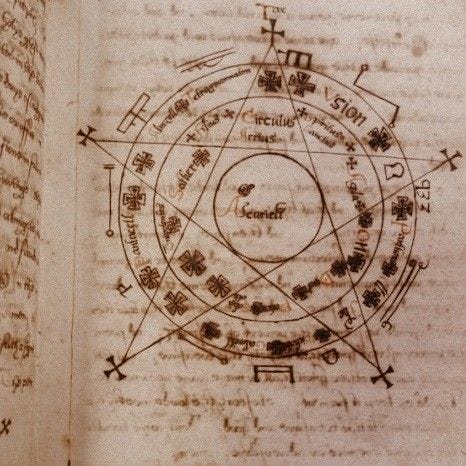
The rot before the gold
I once took two big risks at the same time and only one of them paid off. (Here defining “paid off” as a metaphorical iron still in my fire). I was twenty-seven years old, five years single, untethered and hungry for the world. I was offered an opportunity in California off little more than an evenings conversation. I would have to leave my current job and everything I knew. That was the first risk. The second was bringing along the man I’d recently started dating. About this man: He had a few good perspectives, (though I exhausted them quickly). Mostly he was great at repackaging what I said with a bow on top, judgment-free.
After his infidelity (surprise!) I got rid of him and found his essence in my life behaved like flour — it added bulk but not much flavor on its own. I could mix in whatever I wanted, and he’d take the shape of it, hold the unique ingredients without question. When he was gone, I found all the essential bits still there; I was the substantive part, he was just a fine filler. I don’t say this to brag, and in fact I still have to fight off a bit of embarrassment for ever dating him. Most humans I entangle with have pushed me to be a better version of myself and yadda yadda. If they left, I could see the holes they left and I’d try to grow a new part or two to fill it, grateful they revealed a blind spot. With him though, he left and I felt full. No holes. I checked.
After that relationship, I still came out altered (I believe in a good way), but by an almost self-fulfilling alchemical process. See, everyone had raised their eyebrows at our courtship, but I didn’t need them to trust him, I needed them to trust me. I trusted me, and even though the relationship failed, the trust with myself only grew. Because self-trust, in this frame, wasn’t a delusional confidence that nothing could ever dissolve. It was trust that I’d’ still cohere on the far side of dissolution.
The right fire over the right duration
Alchemy is, in some contexts, a temporal art. The transmutation can’t be forced, it needs gentle, sustained heat over enormous duration. Too much heat cracks the vessel and ruins the work; the adept who blasts the furnace fails. But too little heat and the fire never starts. Mircea Eliade, in The Forge and the Crucible, frames the alchemist as someone who collaborates with time and accelerates nature: doing in months what the earth, left alone, does in eons. The alchemist makes time. They master duration instead of being subject to it. One motto reads festina lente: hasten gently.
This reframes the oldest personality split, the introvert and extrovert, as something other than two kinds of people. But maybe it’s just two ways of getting the fire wrong. One failure runs too much heat, too fast: every hour pre-committed, activity mistaken for transmutation. The vessel cracks under a flame it was never built to hold. The other is a fire that was never lit: duration passing with no heat applied to anything real. This was me for a long while… the endless daydreamer whose base substance was hardly worked at all.
The more you indulge something, the more you get from it. Indulge in gossip and you find more chaos; indulge in the Internet and you get sucked further down. It works for most things, which is actually the good news. If you indulge in your prima materia, in your art, you’ll find more of that, too. Wring it dry and it will whet again because creativity has no bottom. Too often we fixate on the width of the well and forget it has the depth of an ocean. Don’t stand at the edge thinking it’s a shallow, oversaturated pool — that’s only the shore, where everyone first wades in and most people never leave. (Elitist of me, I know. I stand by it.) Swim, and keep swimming. One idea always begets another, which begets two more.
On leaving space
For those marinating in discontent (you want to dedicate your life to your art but keep getting distracted by complicated romances, random hobbies, your job, TV) fear not! Either it’s a passing obsession or a recurring one. Either you’ll make time for it or you won’t. This is the best thing about aging, and a reason not to fear it but to embrace it: aging only reveals to you your essence, your prima materia gone fertile.
Which leads me to the one opinion I can share, on how to bend time to your will like the alchemists of old. Don’t overfill your life, and if you already have, be prepared to prune some of it. Leave a space open to the unknown, to the hobby that will need somewhere to multiply. Leave room for growing pains. Put more logistically: leave time. Let yourself be bored. It applies to debt, too. Look at your subscriptions, your bar tabs, your Uber Eats receipts. Where can you prune? Don’t say yes to everything. Sometimes you have to say no, so that when a bigger, better yes comes around, you’re not elbows-deep hosting a friend-of-a-friend’s birthday weekend at your house, unable to disentangle. Or so cozy in someone else’s on-screen life you don’t want to live your own.
The goal of the Work was always imaged as a marriage, the coniunctio, the wedding of fundamental opposites: Sol and Luna, King and Queen, sulfur and mercury. In terms of our creativity, this manifests in different modes of hunger. The appetite for the world and the appetite for the interior, two principles that have to be married inside one person. Maturity is the wedding of the two, not the victory of one. Aging into self-trust is being worked by the slow fire. Hasten gently. You’ll cohere on the far side.