


Both Alasdair Gray’s 1992 novel Poor Things and Yorgos Lanthimos subsequent film adaptation ask a question most stories carefully avoid: what happens when a person learns sexuality before they learn the rules meant to govern it?
When Dr. Godwin Baxter fishes a deceased woman’s body from the depths of the river Thames, he decides not to resurrect her unborn infant child but use its brain to bring the woman herself back to life. Thus Bella Baxter is born. Described so aptly in the book as “the soul of an innocent, trusting, dependent child inside the opulent body of a radiantly lovely woman” (p 36). After learning walking, speech, and masturbation, curious Bella impulsively decides to elope with Baxters lawyer (Duncan Wedderburn), while still only possessing the mental acuity of a child.
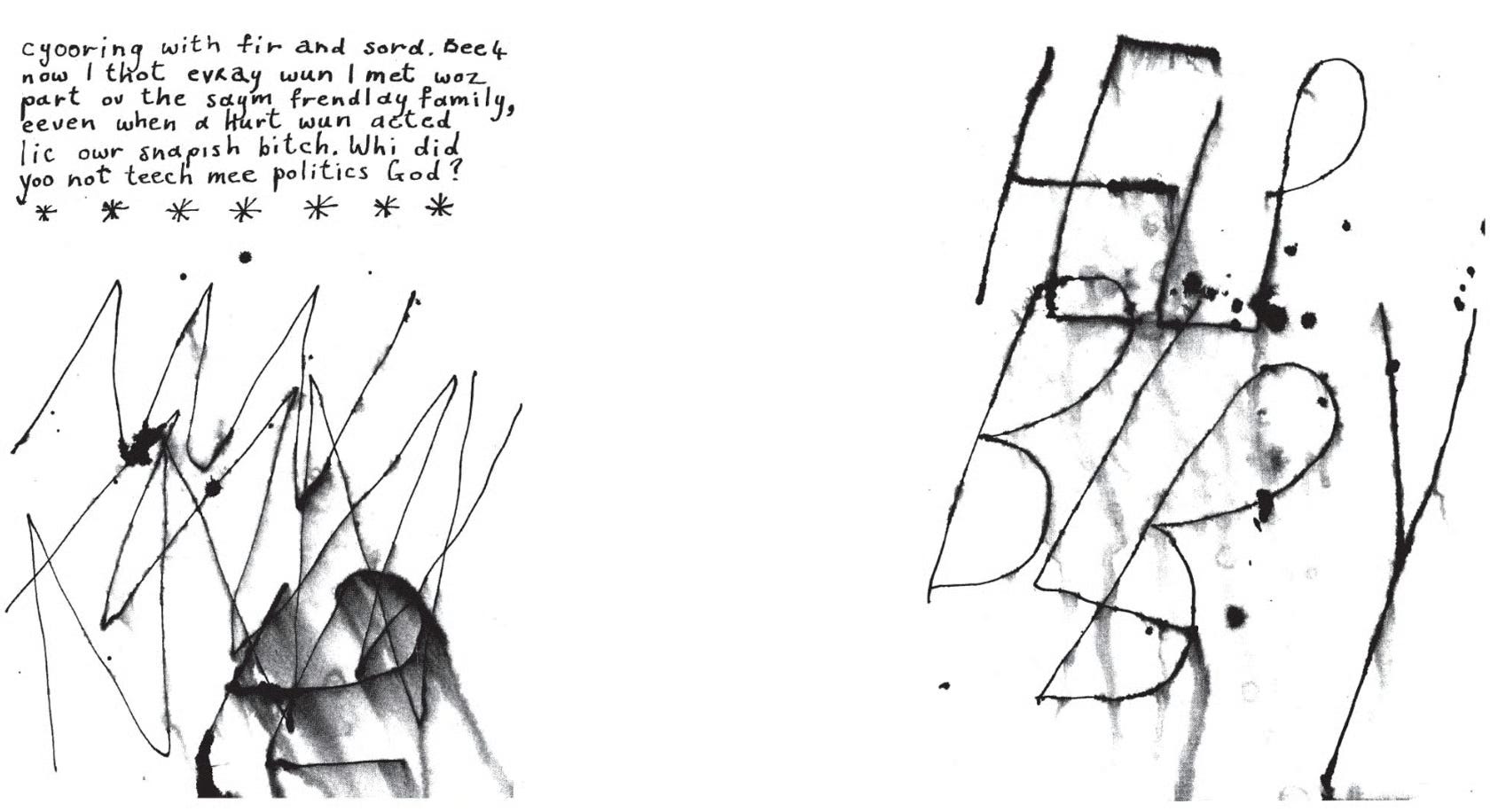
“I need more past,” Bella says before she runs away. “On our boat up the Nile a fine lady travelled alone and someone told me she was a woman with a past, O how I envied her” (p 61). She also unashamedly details her sexual exploits with the rakish Wedderburn.
Few experiences are as universal—and as narratively uncomfortable—as the first time someone realizes their body can give them pleasure. Perhaps the film’s greatest advantage over its source text, is its ability to visually portray a childlike discovery of sexuality without sexualizing children. This aspect may explain why the film resonated strongly with many female viewers. Being young and unable to voice sexual curiosities is a unique horror of childhood; many children lack the language when they need it and/or a safe environment in which to question their experiences.
The central tension of the film begins here but ends somewhere else. Bella is portrayed as a character without social memory — approaching sexuality like a scientist approaching an experiment. Yet the world she inhabits is structured by power, experience, and knowledge that she does not yet possess. While the books final twist changes the frame of the story entirely, the film takes a different direction. Unfortunately, it stops short of developing any coinciding vulnerability of a curiosity it seeks to explore, particularly how curiosity without language or social knowledge can invite exploitation.
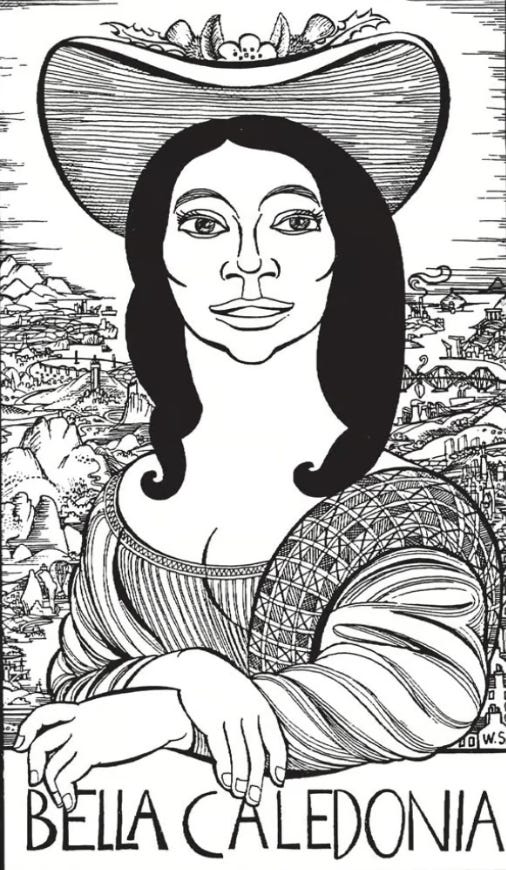
Bella without Social Memory
Bella begins her second life without the accumulated knowledge that most people inherit through childhood and socialization. She does not yet understand shame, reputation, social expectations, gender norms, or the cultural scripts surrounding sexuality. Because of this, Bella interacts with the world through pure curiosity, and Godwin Baxter encourages this. Before she elopes with Wedderburn, the film shows her discovering masturbation, and script writer Tony McNamara writes it comedically.
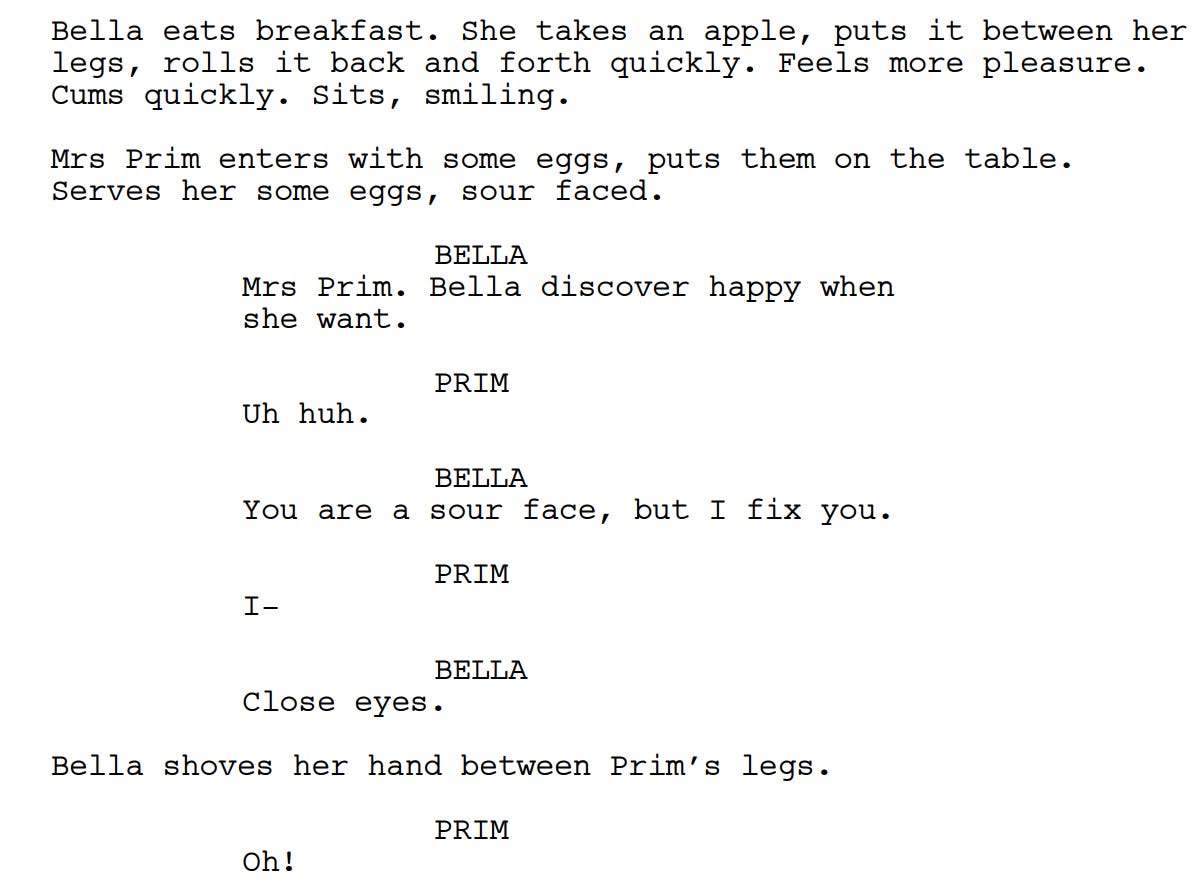
Many children encounter sexuality long before they possess the language to articulate their questions, and attempt often precedes understanding. Bella’s condition literalizes this developmental gap. She enters adulthood without the cultural understanding that helps shape sexual behavior. On her travels, Bella encounters a world that operates under confusing societal norms. The people around her understand power, manipulation, and consequence in ways she cannot yet grasp. In short, Bella lacks social memory, but the world does not.
This allows the film to stage a fascinating experiment: What happens when desire appears before instruction?
Bella as the Scientist of Her Own Desires
People often start experimenting during adolescence (and Bella is very much cognitively still in adolescence), ideally in a safe environment and/or with peers their own age or with a similar experience level. When we experiment, we rarely arrive at definitive answers. Instead, we receive feedback. These feedbacks typically accumulate slowly throughout life, into a tentative hypotheses about what we want and who we are, which must eventually be translated into language. However, after ditching Wedderburn, Bella’s sexuality is explored at an exponential speed when she is employed as a sex worker in Paris.

While Bella embodies this process of discovery, experimentation alone does not produce liberation and sexual freedom is not simply the ability to impulsively act. Agency requires language, reflection, and the ability to contextualize experience. The purpose of experimentation is twofold: to discover what one enjoys or does not enjoy and to strengthen the ability to communicate those preferences.
Curiosity Without Language (The Real Vulnerability)
Bella’s curiosity is celebrated throughout the film, but curiosity without knowledge is a vulnerable state to inhabit for long. In real life, children initially lack the language to articulate their questions, the knowledge to recognize exploitation, and the power to refuse unwanted situations. They learn by accumulating small misreadings of the world—moments when they trusted the wrong person, laughed when they should have objected, later realized a touch was not quite right, experienced a sinking feeling of realizing too late that a joke was not meant kindly, etc. These are not failures so much as the rough drafts of self-knowledge, with takes a certain amount of bravery and time to safely explore. These qualities coexist uneasily: curiosity and fear, bravado and confusion. Childhood is not pure innocence nor fearless discovery, but a volatile mixture of both.
The film hints at this vulnerability but rarely confronts it directly. Instead, Bella is portrayed as remarkably resilient, confident, and unconcerned throughout her experiences. She is never ashamed. She is never afraid. She is never uncertain. After a while, the absence begins to expose a missing emotional reality, one that makes the portrayal feel psychologically incomplete. Children’s experiences—whether loving or violent—can shape them profoundly for the rest of their lives. Yet Bella appears largely untouched by the emotional consequences of her encounters.
The film suggests these negative emotions, particularly shame, are largely cultural construct. But it is not only cultural. Negative emotions serve important psychological functions. They allow people to reflect on their decisions, reassess their behavior, and exercise agency in future choices. Yet these moments rarely appear in the film. Even when violence erupts—such as when Wedderburn attempts to kill Bella’s friend Martha by throwing her overboard — Bella responds with laughter. Martha herself appears strangely unconcerned.
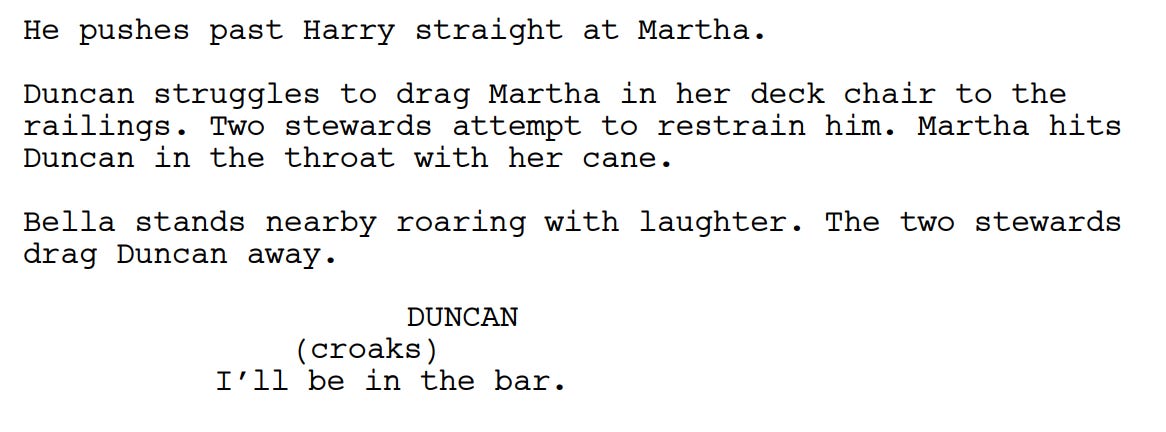
The effect is unsettling. Violence becomes something to laugh at rather than something capable of producing any damage. This emotional invincibility creates a fantasy version of curiosity that downplays the real risks faced by people navigating sexuality without guidance.
Real-World Parallel: Sue Lyon and the Ethics of Sexual Representation
In Vladimir Nabokov’s novel Lolita, a story of child sexual abuse is told from the perspective of the predator himself: the thirty-seven year old stepfather, Humbert Humbert. The carefully constructed narrative exposes the warped thinking of an abusive adult without requiring an actual child to embody that exploitation.
“In literature, no one gets hurt, because literature is not real,” Tom Bissel says in an essay collection on Nabokov’s work. “Yet film and television sort of are real when you’re talking about children being tasked with roles whose impact on their lives they are in no position to understand.”
When Stanley Kubrick adapted the novel into a 1962 film, fourteen-year-old actress Sue Lyon was cast as Lolita. The film aged the character up and presented her as a seductive “nymphet,” effectively transforming a story about abuse into a narrative that sexualized the young actress playing the role. Producer James B. Harris said in an interview, “…Lolita—who, we made sure when we cast her that she was a definite sex object, not something that could be interpreted as being perverted.”
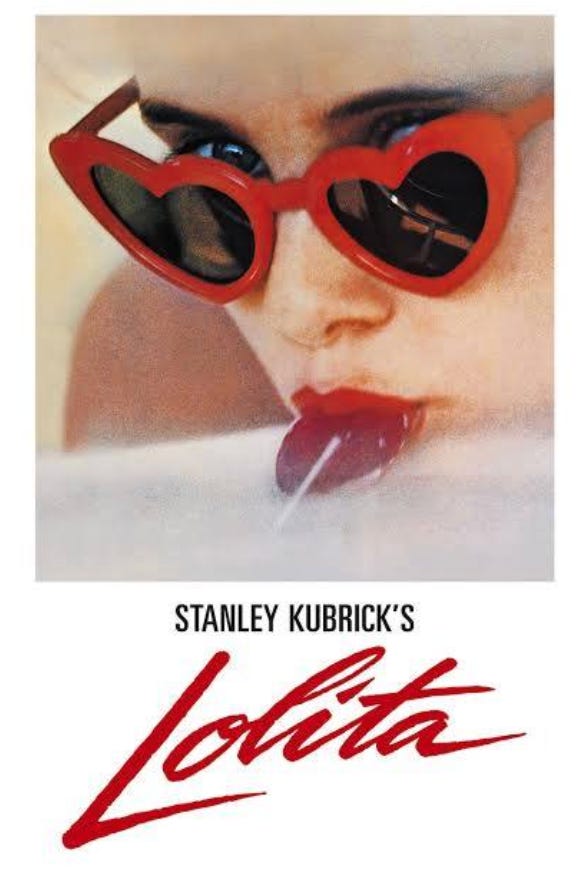
Ultimately, Nabokov did not agree with the portrayal of his character Dolores (twelve years old in the book). “Not only is the portrayal of this poor child grotesquely exaggerated, but her physical appearance, her age, everything has been transformed by the illustrations in foreign publications,” he says. “Outside the maniacal gaze of Humbert there is no nymphet. Lolita the nymphet exists only through the obsession that destroys Humbert. Herein an essential aspect of a unique book that has been betrayed by a factitious popularity.”
Writer Final Girl Digital argues in her Youtube essay that you can’t ethically or morally portray Lolita into a film: “When translating this warped gaze onto screen using real people and most importantly using a real little girl,” she says, “the fetishized, fantastical image of Lolita the nymphet becomes real, thus perpetuating what it sought to criticize.”
It is no wonder Sue Lyon’s film career only lasted until 1980. Lyon stepped out of the spotlight completely, and little is known about her personal life since then. Rumors of a sexual relationship between her and Harris on set of Lolita circulated but were never proven (like Humbert Humbert, Harris was also a married man in his thirties, meanwhile she was not even old enough to watch Lolita in theaters when it came out). She married and divorced five times, had one child who she would later become estranged from, struggled with her mental health, and only made one brief public comment in 1996. She said:
“My destruction as a person dates from that movie. Lolita exposed me to temptations no girl of that age should undergo. I defy any pretty girl who is rocketed to stardom at 14 in a sex nymphet role to stay on a level path thereafter.”
The Novel’s Final Twist and The Films Simplification
At the end of both stories, Bella inherits Baxter’s wealth and lives comfortably. However the novel and film diverge from each other through their narrative framing. The novel reveals that Bella’s narrative was constructed through her husbands perspective, radically altering the meaning of the events described. Bella addresses readers in a letter at the end of the novel and disputes the entire Frankenstinian nature of the story. She suggests that her husband constructed the bizarre scientific backstory as a way of explaining—or containing—her independence and sexuality. Her eccentricities become easier to explain if she is imagined as possessing a “child brain.”
Bella dedicates herself to social reform and political activism. She spreads the inherited wealth through volunteer work and advocating for women’s rights, birth control, and sexual safety. She becomes a thoughtful and hardworking woman, and this transformation has a clear and logical path from her earlier experiences. She reclaims her story from that of her husbands (and ultimately my only gripe with the novel was that we didn’t get to see more from her perspective.)
At the end of the film however, she is drinking gin and enjoying her independence. (Strangely, Felicity, a reincarnated Bella 2.0, acts as their new servant.) The film retains Bella’s narrative centrality but transforms her into a kind of lavish “girl boss.” This shift weakens the earlier thematic groundwork. Bella’s curiosity never really leads to reflection or transformation beyond the unradical choice to reject most of the obviously toxic men around her (except, somehow Max — the student of and co-conspirator to the mad doctor who reanimated her.)
Bella marries Max in the book too but she explains she married Max out of convenience, thus making sense of why someone as independent and intelligent as her could end up with someone who was complicit in her entrapment. The novel thus was able to successfully explore how male narratives shape women’s stories. When the film removed this framing device, it shifted the thematic terrain: By focusing on Bella’s interiority and rapid development, it became uniquely suited to explore the effects this experiment had on her psyche. But Bella’s liberation resembles a version of empowerment defined by adopting traditionally masculine behaviors without questioning the structures behind them.
This imitation problem is echoed in an observation made by Rainer Maria Rilke in his 1904 letter to a young Franz Kappus. Rilke is speaking on the necessary and inevitable breakdown of rigid gender roles when he says:
“The girl and the woman, in their new, individual unfolding, will only in passing be imitators of male behavior and misbehavior and repeaters of male professions. After the uncertainty of such transitions, it will become obvious that women were going through the abundance and variation of those (often ridiculous) disguises just so that they could purify their own essential nature and wash out the deforming influences of the other sex.”
Bella’s journey sometimes felt trapped within this transitional stage. Rather than developing a fully articulated identity, she simply inherits the habits and goals traditionally reserved for generationally wealthy men. Drinking, sex, and accumulating wealth.
Bella’s story offered a fascinating opportunity to explore sexual curiosity and the cultural frameworks that normally shape and contort it. The films narrative shift makes it uniquely capable of exploring the vulnerability, and in some cases, privilege of taking risks. Yet the film ultimately chooses shallow, fast-tracked celebration over deeper examination: Fear, shame, and vulnerability largely disappear. What remains is a fantasy of liberation that sidesteps the deeper emotional realities of learning sexuality in a world structured by power.