
Growing up, I loved being called one of the boys. Today it is seen as cringe, as pick-me behavior, as centering men. I’d like to push back, in my case at least, and here’s why —
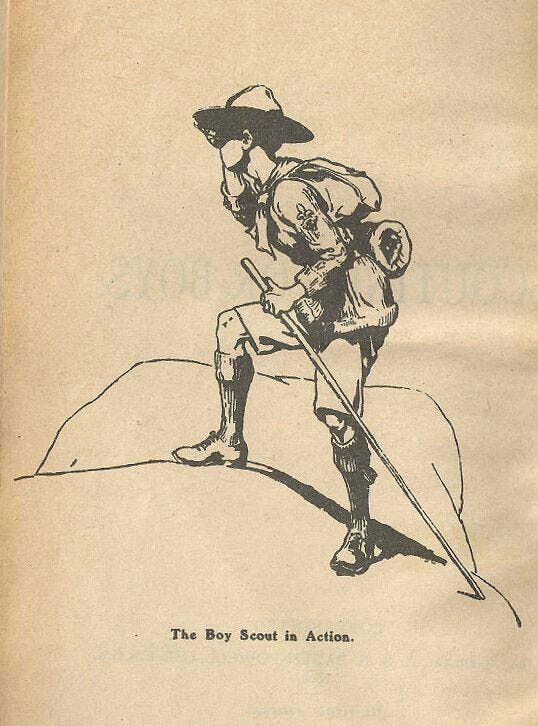
I was raised Mormon, in Southern Utah, otherwise known as the beating heart of the Mormon community. What this means in the context of men vs. women is that men were infinitely cooler. They had cooler youth activities (rafting trips, camping trips, etc.) They were awarded boy scout badges that symbolized achievement and competence, and held ceremonies to celebrate those accomplishments.
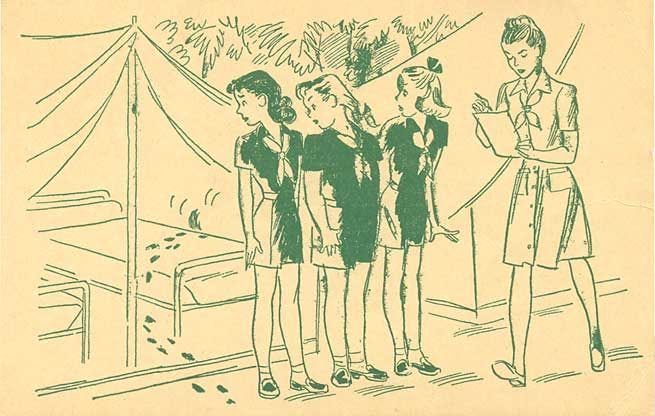
The girl’s prized skills and youth activities were domestic, which I may have liked if they were actually artistic instead of prescriptive. But the crafts we partook in were modest and frugal. They were boring, one-note, and usually all in the service of others. (i.e, cook this meal for your entire family! Not, think about what you want to make.) I loved arts and crafts as a kid, so why would I suddenly hate them in a church setting, if there wasn’t something fundamentally missing from the creation process?
In my naïveté, it seemed the boys activities were better, but really it wasn’t so much the activities themselves, but how deeply and personally they were allowed to engage in them. They were the leaders and got to make decisions. They were funnier and they were louder and they were listened to. They got what they wanted. The boys were better because the budget allowed for it and the power structures wanted them to be. Meanwhile, the philosophy for women was an unhealthy combination of being taught how to increase our domesticity and practical value while also being instructed where to spend that value (on righteous, church-going men, of course).
There were no women I looked up to except my mother, and she was never raised a “Utah Mormon.” (A phrase which all Mormon kids understand to mean “more strict.”) My mom was raised in Washington state (bare-footed and wild-hearted and with significantly more diversity). She, a self-described tomboy, embodied a kind of freedom that had me reaching for peers with the closest approximation to her: the boys, aka those with a hunger for life that was state-sanctioned and could actually be satiated.
Part 2; Southern Utah blows up
When California boomers and young conservative families discovered Utah’s low crime rate and temperate winters, it’s population boom began in earnest. Very quickly the collar-bone covering, bare-faced Mormon mom became outnumbered by well to-do, well kept, spray-tanned Jack Mormons — those who do not strictly follow the religious guidelines and parade themselves as Mormon, but ‘cool’. The Utah Mormons distrusted their new neighbors for misplaced reasons like, they ‘wore slutty clothes to the gym’ and ‘drank coffee’. The reality is much more complicated, and in direct correlation with Utah becoming a huge hub for beauty culture. A judgy, perfectionist, comparative community obsessed with marrying their young women off is prime real estate for the cosmetic (aka Looksmaxxing) industry.
Here we approach the fraught topic of cosmetic enhancements, and where I sidestep a worthy debate on the feminist merits of botox, fillers, plastic surgery, ‘self-care’ and the rest. I’ll be briefly honest because I don’t feel like censoring myself. I think most cosmetic enhancements are a vapid place to spend your money, given the poor state of the world. And I have also gotten botox thrice before and watched in fascination as the forehead wrinkles and scowl lines melted off my face. I have benefitted from "looking my best,” every one does. Which is unfortunately another mark of the poor state of the world that people, and women in particular, feel they have to maintain such unrealistic beauty standards to get ahead, or even stay afloat.
This dichotomy is especially hard for me because I grew up with a mom who didn’t give two shits about trends, dying her grays, or what anyone said about her. She was a focused woman, who has dedicated much of her life and time to family history research, reading, and raising foster animals and foster children (I would eventually have a grand total of four adopted siblings). It was impossible not to look at these new neighbors as “fake” (however reductive the word) and my mom as “real.” And I don’t blame myself for holding the very reasonable belief that these dominant versions of femininity presented to me as a child and teen were, in fact, inferior. And if anything, these versions were centered on men, more than trying to be like one ever was.
I credit my mom for teaching me that I could still reach for everything I was being denied, and that women contain multitudes (even those living out aspects of femininity I don’t agree with). Who’d have thought! It’s not revolutionary thinking, except for a 15-year-old born in the Mormon bible belt, it was. The beliefs and cultures we build around these binaries, or because of them, or in spite of them, have far-reaching effects. How fascinating. But what do I know? — I’m just one gal who wished she had a few merit badges collecting dust on a shelf somewhere.